You had your pavers sealed, they looked great for a while, and now there are milky white patches across the driveway. It’s frustrating, and it’s one of the most common calls we get. The good news is that it can almost always be fixed.
What “white sealer” usually means
When a sealer turns cloudy or white, it’s typically a sign that something went wrong with how it was applied or what it was applied over. The most common causes are:
- Trapped moisture. Pavers were sealed too soon after cleaning or before sprinklers dried, and water got locked under the coat.
- Too much sealer. Heavy coats, or layer after layer over the years, build up into a thick film that can cloud and peel.
- Sealer over efflorescence. White mineral salts that come up through pavers were sealed in instead of being treated first.
- Wrong product for the surface. Some sealers don’t breathe well enough for Arizona pavers that get regular irrigation.
Can you just seal over it?
Unfortunately, no. Sealing over cloudy or peeling sealer locks the problem in and usually makes it look worse. The failed coat needs to come off first.
How the fix works
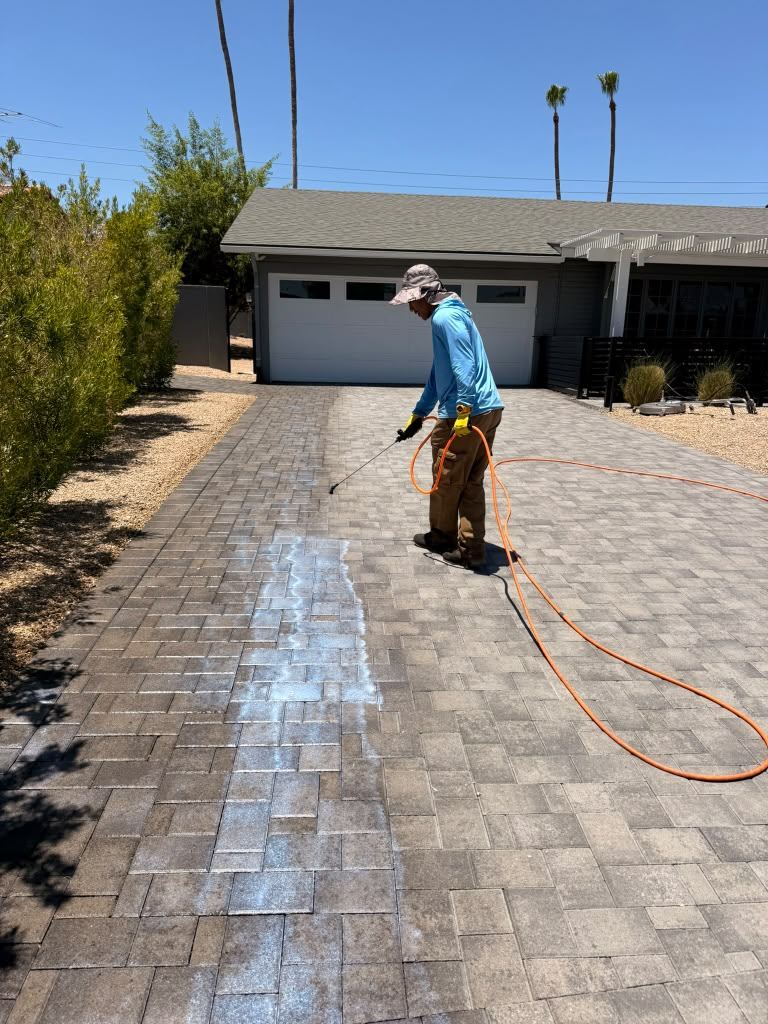
The proper repair is paver stripping: a stripper is applied to break down the old sealer, then the surface is rinsed and cleaned thoroughly. Efflorescence and stains get treated while the pavers are bare. Once everything is fully dry, the joints are re-sanded and a fresh sealer goes on in thin, even coats.
It’s more work than a standard reseal, but it gives you a clean slate and a finish that cures clear.
How to avoid it next time
- Make sure pavers are completely dry before sealing, and keep sprinklers off for the cure time.
- Choose a sealer suited to Arizona pavers and how the area is used.
- Apply thin coats rather than one heavy one.
- Treat white haze before sealing, not after.
If your sealer has gone white, cloudy or flaky, send us a few photos. We’ll tell you honestly whether it needs stripping or a lighter fix. See our paver restoration options or contact us for an estimate.