A pool deck is one of the hardest-working surfaces at an Arizona home. It gets direct sun, chlorinated or salt water splash, sunscreen, bare feet and constant wet-dry cycles. Whether your deck is pavers or travertine, sealing it takes a slightly different approach than sealing a driveway.
Slip resistance comes first
A high-gloss, wet-look finish can be beautiful on a driveway, but around water it’s not always the right call. For pool decks we usually recommend a natural or matte finish, and where needed we add an anti-slip additive to the sealer. You still get stain and UV protection without making the surface slick for kids and guests.
Travertine needs to breathe
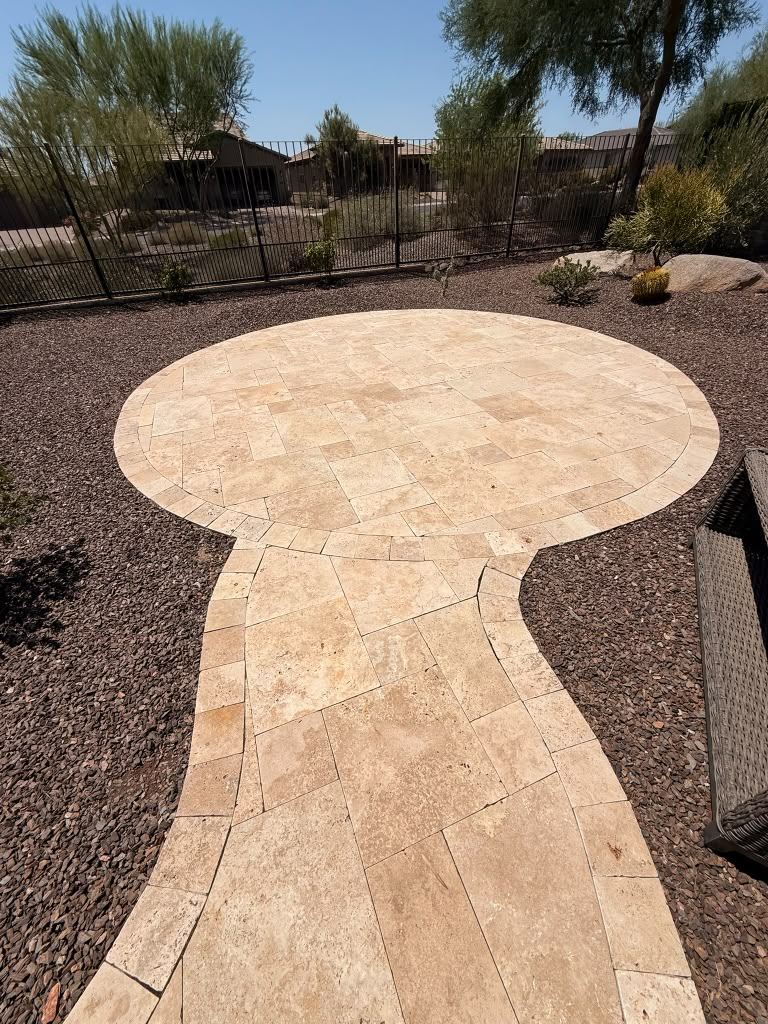
Travertine is a natural stone full of tiny pores. It handles heat better than many surfaces, but it can absorb stains and mineral deposits easily. The right sealer for travertine is usually a penetrating, breathable sealer that protects from inside the stone without leaving a plastic-looking film. Topical coatings can trap moisture under the surface and lead to cloudiness or flaking.
Clean before you seal
Pool areas collect calcium scale, algae in shaded corners and residue from pool chemicals. All of that needs to come off before sealing. On travertine, any open holes may also need filling first so dirt doesn’t collect in them.
Timing in the heat
Sealing in summer is possible, but timing matters. Surfaces that are too hot can make sealer flash-dry and look streaky. We schedule pool deck work early in the day and plan around your pool use, since splash needs to stay off the deck while the sealer cures.
Keeping it looking good
- Rinse the deck regularly to wash off pool water and sunscreen.
- Avoid harsh acid cleaners on travertine.
- Check the surface each year by splashing water on it. If it soaks in, it’s time to reseal.
Want help choosing the right finish for your pool area? Learn about our pool & patio sealing and travertine sealing services, or request a free estimate.